

Chapel Gate Eco Park
Expansion
Who is Eco Sustainable Solutions?
Eco is a family run company specialising in Waste & Renewable Energy. Since Eco was founded in 1995, we’ve recycled over 4.3 million tonnes of organic material, preventing over 2 million tonnes of CO2e from being emitted to the atmosphere – that’s the equivalent to over quarter of a million return flights to Australia!
Over the past 30 years, Eco has led a variety of sustainable projects from organic waste recycling, producing green power from food waste to developing, at the time, the largest Solar Farm in Europe.
We have been instrumental in developing and promoting organic recycling on a national level, to benefit on a global scale. Eco currently recycles over 250,000 tonnes of organic material each year, converting it into renewable energy or high-quality landscaping products, like certified composts, mulch, and nutrient rich topsoil.
From sustainably leading the way in the development and implementation of renewable energy solutions, to our passionate team constantly challenging themselves to make processes more carbon efficient, we will continue to fight climate change by constantly striving to be Always More Sustainable
What is Proposed?
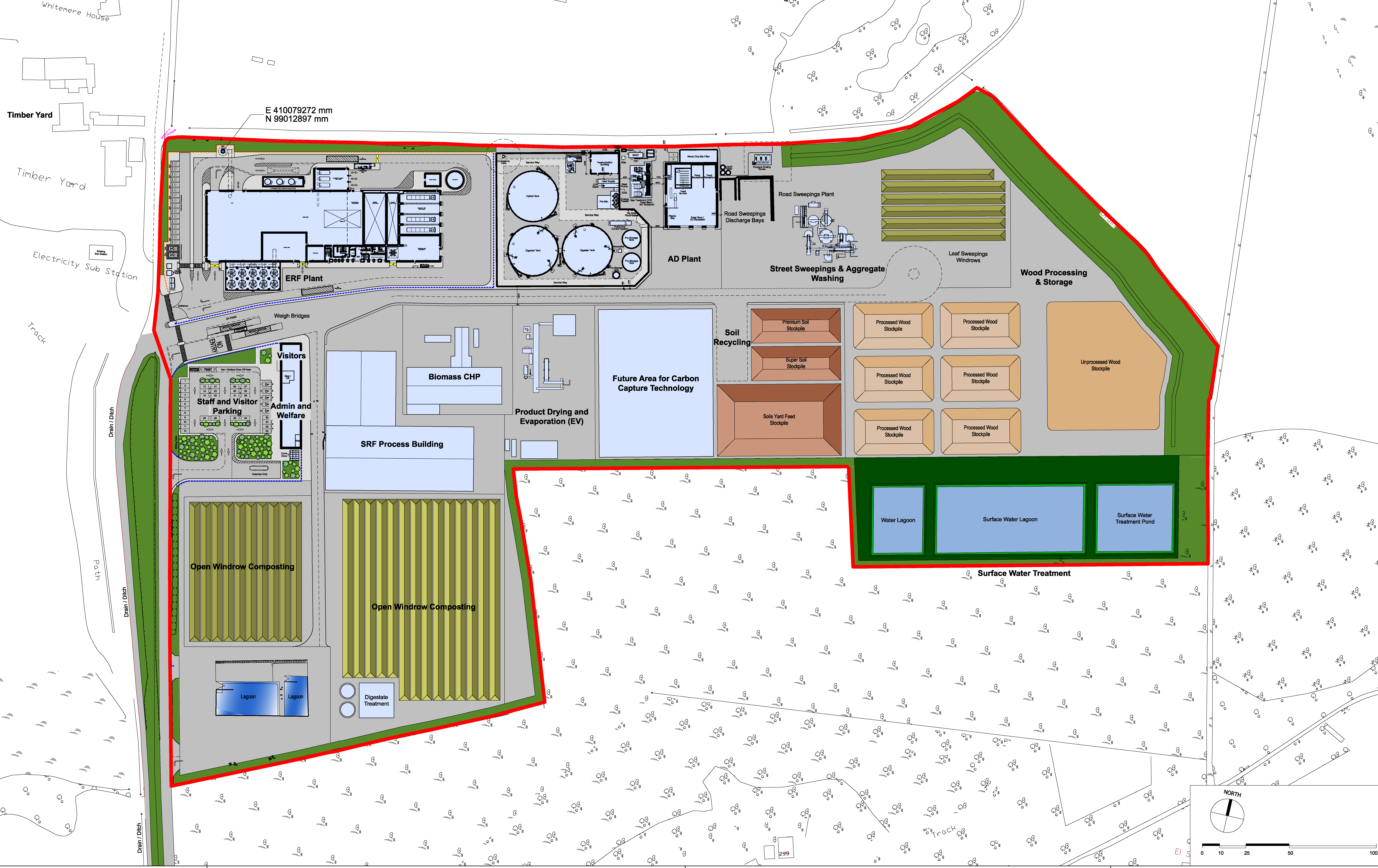
Making the best use of the Eco Park
The Eco Park already extends to around 40 acres, and this proposal would not increase its overall size. Instead, it focuses on making better use of the space already available by improving how the site operates and ensuring it is fit for future needs.
As waste policy, recycling systems and local demand continue to change, different parts of the Eco Park will need to play different roles. Some activities, such as soil-related operations, are expected to become less important over time, while demand for other recycling and recovery activities is expected to grow. This proposal responds to those changes by rebalancing the site so that land is used in the most effective and sustainable way.
The proposals include increases in capacity for the Energy Recovery Facility, green waste and wood waste operations, helping the Eco Park manage more of the materials that local homes and businesses are expected to produce in the years ahead.
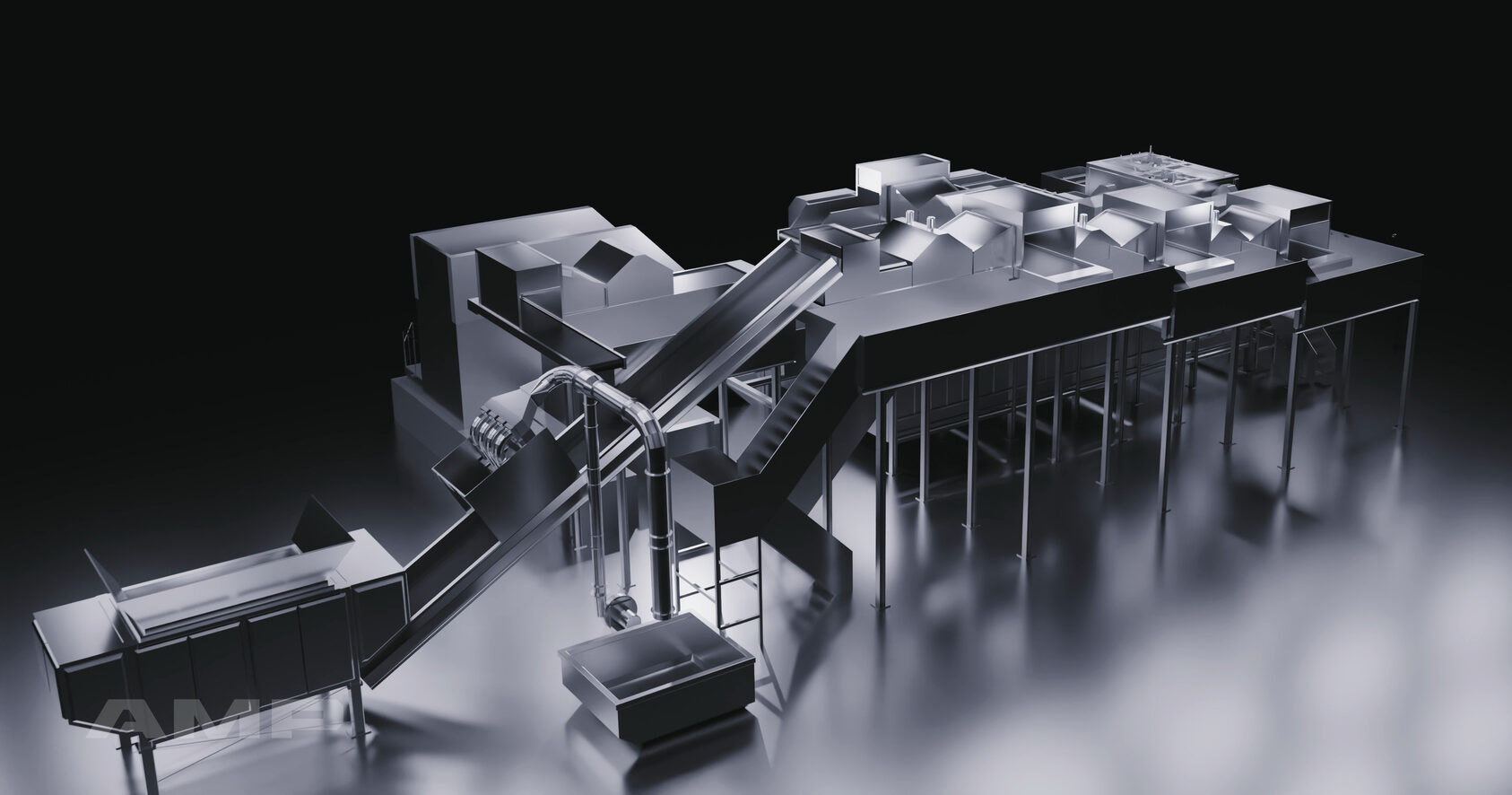
A key part of the proposal is the introduction of a state-of-the-art, AI-led sorting facility. This facility would pre-sort local residual waste to remove any remaining recyclable materials and fossil-based plastics before the waste is sent for energy recovery. This means the Eco Park would be better able to ensure that only waste that cannot realistically be recycled is used to generate energy.
Why this matters
Overall, the proposal is about creating a more efficient, modern and future-ready Eco Park — one that increases recycling, reduces unnecessary transport, makes better use of existing infrastructure and ensures that local residual waste is managed as sustainably as possible.
A smarter, more efficient Eco Park — designed to reduce waste miles, maximise recycling, recover value from local waste and make the best use of an existing 40-acre site.
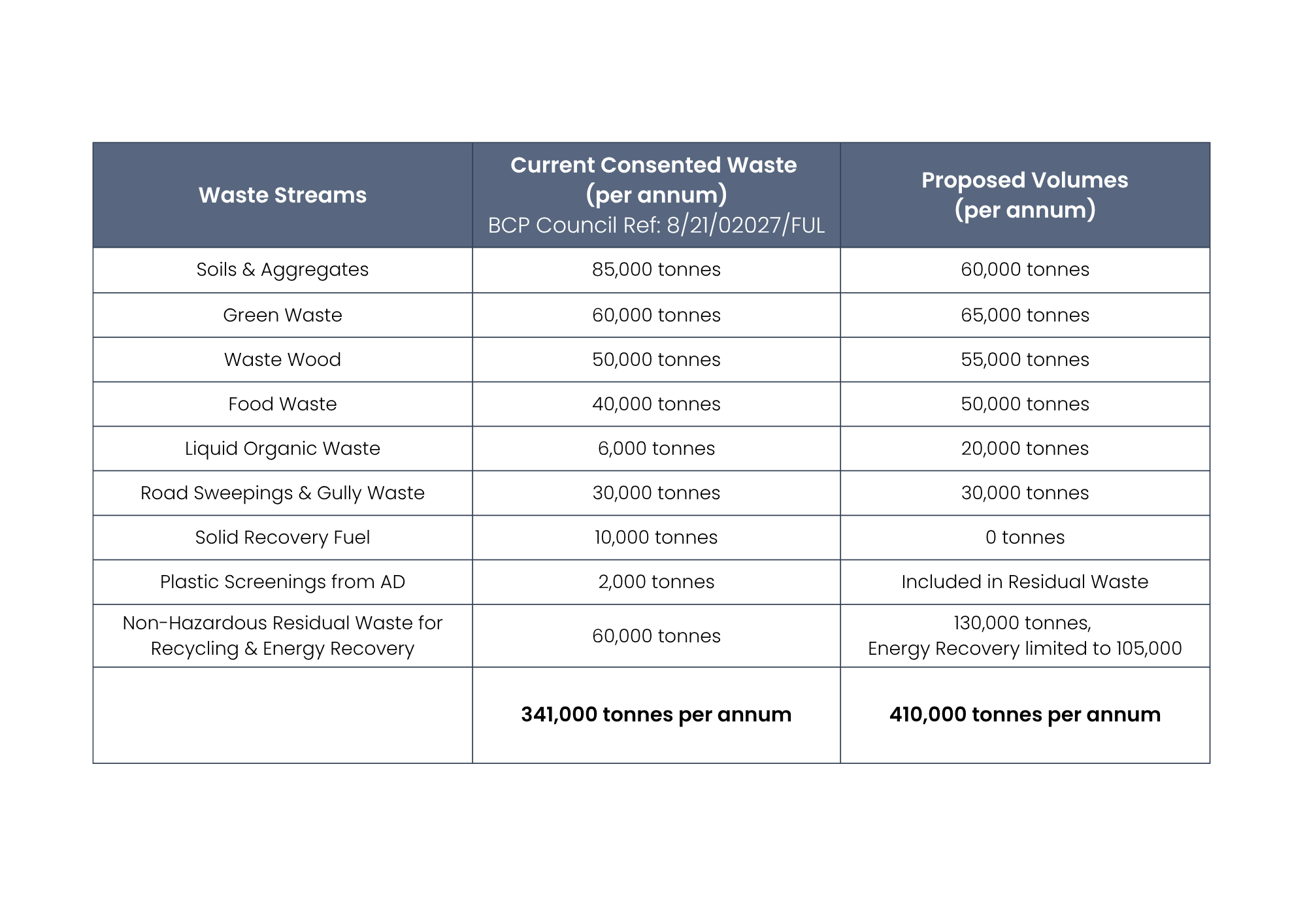

410,000 tonnes
Local Waste Treated Yearly

70 GWh
Biogas Generated
(enough to heat ~6,000 homes)

215,542 tonnes
Est. CO2e emissions saved

11 MWh
Low Carbon &
Renewable Power
(enough to heat ~36,000 homes)

170,000 tonnes
Soil Enhancing Composts &
Soils Produced
What is an Energy Recovery Facility?
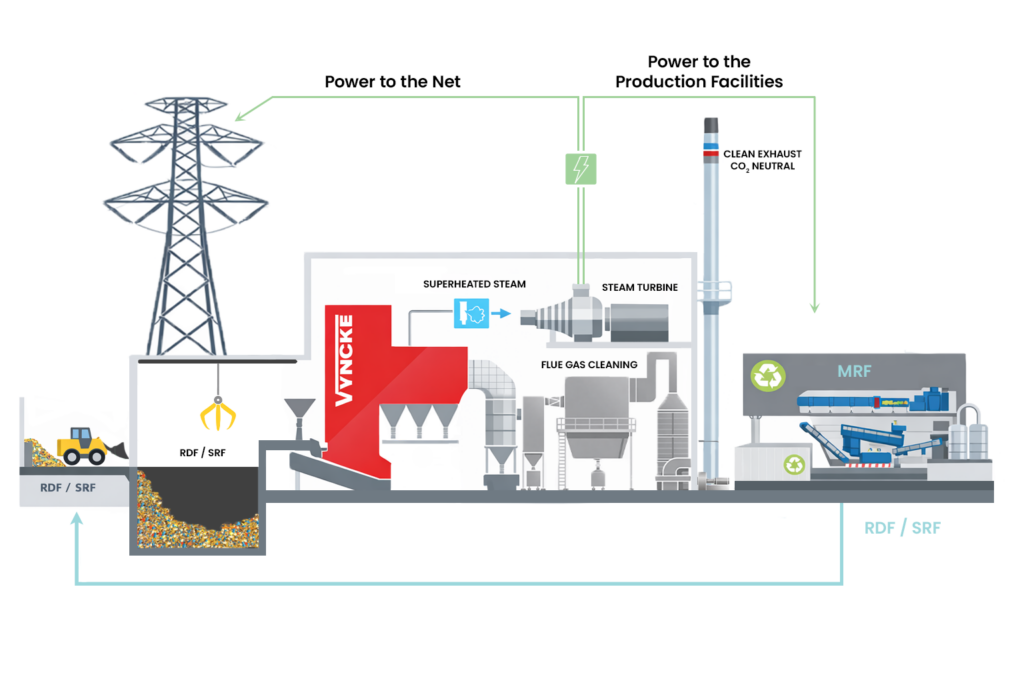
An Energy Recovery Facility (ERF) uses Refuse Derived Fuel (RDF) made from waste that remains after as much material as possible has been recycled. Through a carefully controlled high-temperature process, this residual waste is converted into useful heat and electricity.
How are emissions managed?
Emissions to air are controlled using advanced filtering and treatment systems, including specialist filters and Advanced Catalytic Reduction technology. Strict emission limits are set and regulated by the Environment Agency, with continuous real-time monitoring to ensure the facility operates safely and within its permit at all times. If it does not comply, it cannot operate.
What is being proposed?
To help meet local demand, we are proposing an increase in the annual throughput of the ERF at the Eco Park. Importantly, this increase would not raise emissions above the levels already consented. Those consented levels were assessed as having only a very small (less than 1%) impact on local air quality.
Local air quality
Despite the Eco Park and other local infrastructure, local air quality is, and is expected to remain, classified as ‘good’ under Air Quality Index standards.
Why does it matter?
ERFs play an important role in managing the UK’s residual waste that cannot be recycled, while recovering value from it in the form of energy and using modern technology to carefully control emissions. Currently, local waste is trucked hundreds of miles to other similar facilities or landfill sites.
Is it noisy or smelly?
No. All operations will take place inside an enclosed building designed to control both noise and odour. The building will operate under negative pressure, which helps prevent odour from escaping, and it will be insulated to minimise noise. As a result, the facility is designed so that noise and odour impacts on the surrounding area are kept very low.
What will you do with the heat & power?
The Eco Park is an established industrial, waste and recycling site, where there is already significant demand for heat and electricity from existing activities. Electricity not used on site will be exported to the grid via an existing connection. We are also working closely with BCP Council and neighbouring users to explore a local heat network, helping to make the best possible use of the heat generated and maximise the overall efficiency of the facility.
How Does the Sorting Facility Operate?
The proposed sorting facility is an advanced, AI-led recycling plant designed to recover recyclable materials from local residual waste — the waste that remains after household and business recycling has taken place. It will be housed within an existing building that will be refurbished and upgraded as part of the Eco Park.
Using a combination of proven sorting technologies, the facility will separate mixed materials into clean, high-quality streams that can be sent on for reprocessing into new products. This helps recover more value from waste and reduces the amount that needs further treatment.
How does the process work?
The facility will use a series of shredders, screens, magnets, optical sorters and air classifiers to identify and separate different materials. Optical sorting technology uses infrared light to distinguish between different types of plastics and paper, while other equipment separates lighter and heavier materials and removes metals for recycling.
What role does AI play?
At the heart of the facility is artificial intelligence technology that continuously learns and adapts to the material entering the plant. This enables the system to identify and sort recyclable materials more efficiently and more accurately over time.
Why is it important?
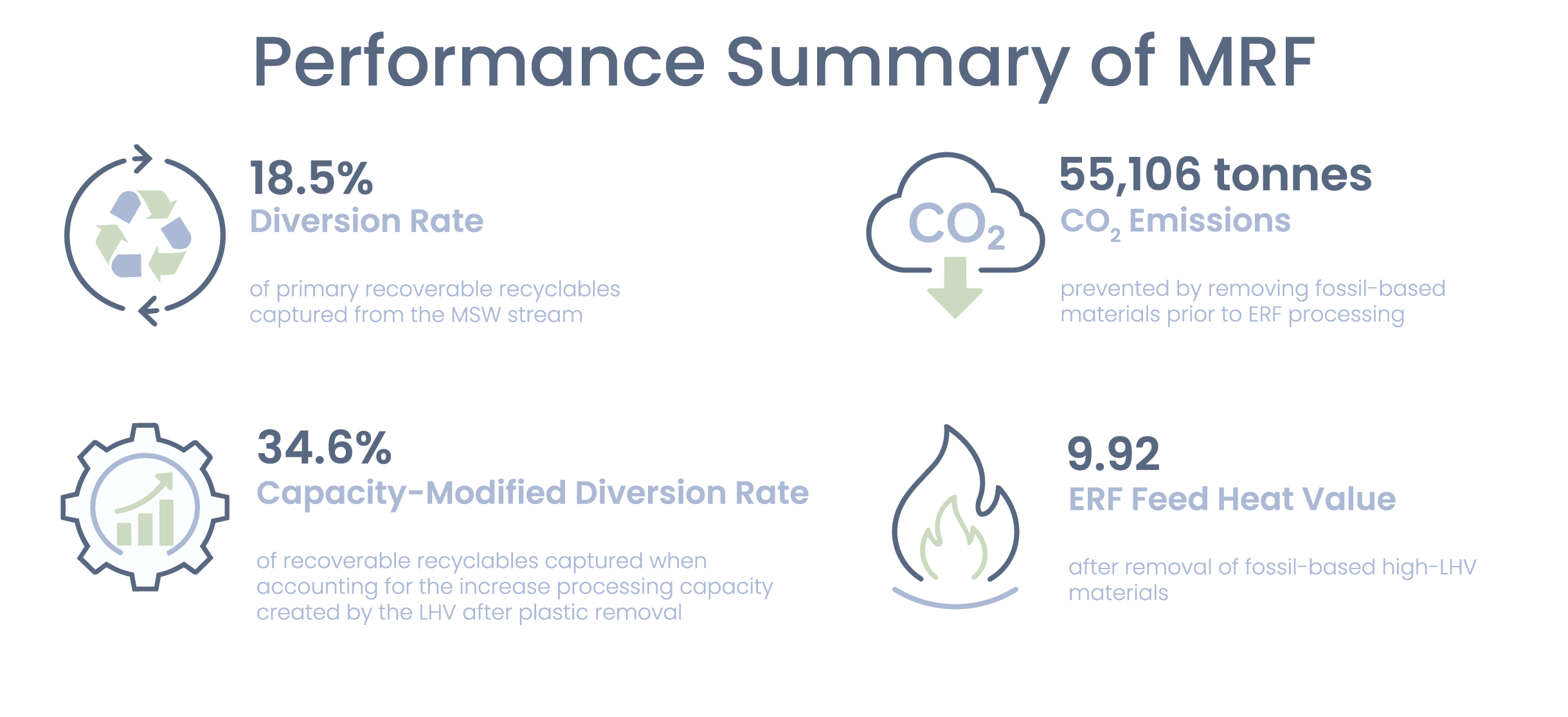
Detailed waste composition studies show that a significant proportion of local residual waste still contains recyclable material. The sorting facility will help recover this material and return it to productive use, complementing existing kerbside recycling collections for local households and businesses.
What will it achieve?
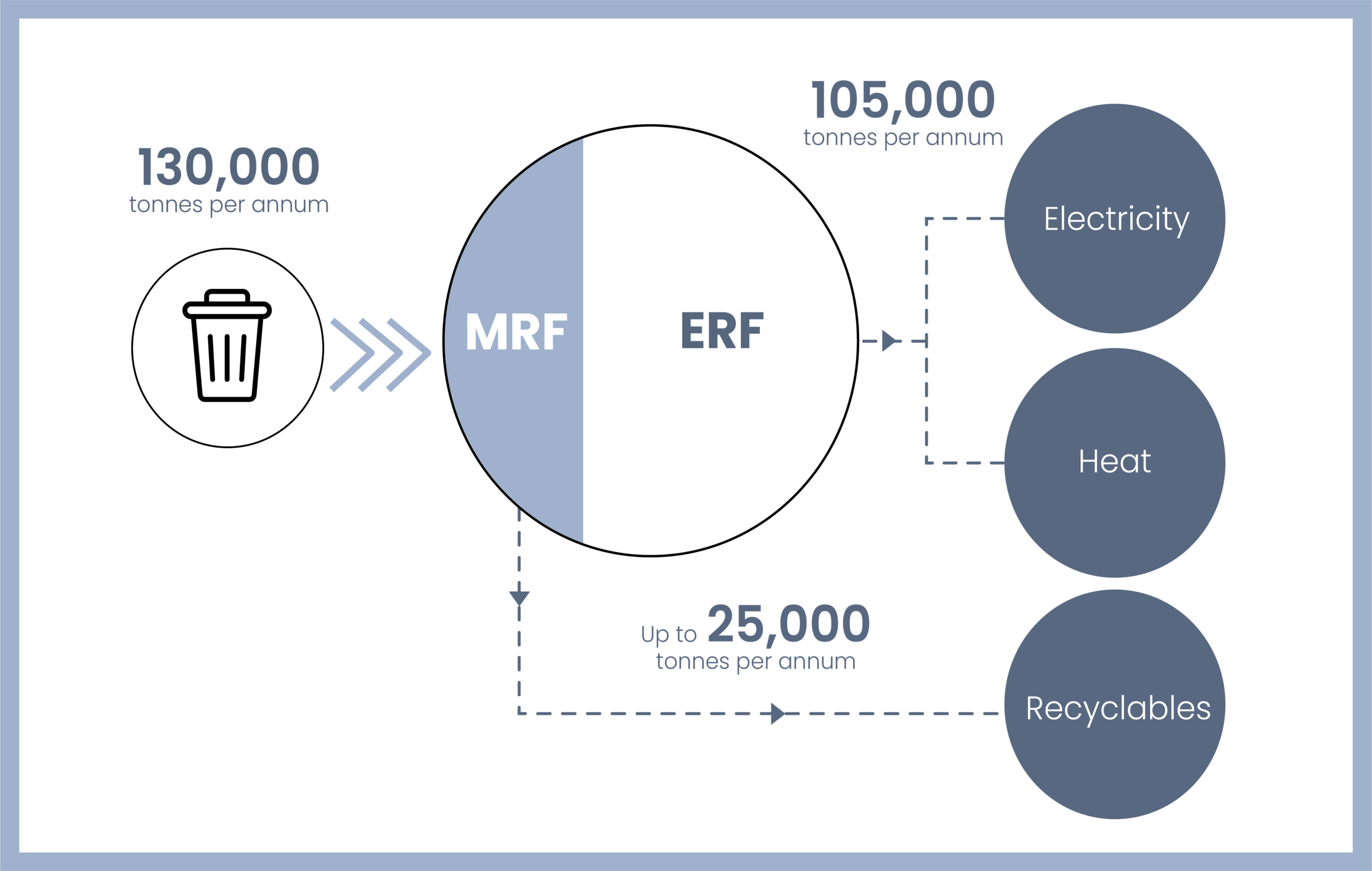
The facility is designed to process up to 130,000 tonnes of residual waste each year, recovering around 25,000 tonnes of recyclable material. The remaining 105,000 tonnes will then be processed into fuel to recover the energy through the ERF.
Why Expand the Eco Park Now?
Recent changes in waste legislation are reshaping how waste is managed across the UK, with a stronger focus on increasing recycling and reducing reliance on landfill.
However, significant volumes of residual waste are still being disposed of unsustainably. Across the UK, around 1.4 million tonnes of local authority residual waste is still sent to landfill each year, while a further 1.7 million tonnes is exported overseas for incineration.
Why treat waste locally?
There are currently no operational facilities in or around the BCP and Dorset area capable of treating local residual waste at the scale required. As a result, this waste is often transported hundreds of miles by HGV to third-party facilities elsewhere in the country. This is neither efficient nor sustainable.
By treating residual waste locally at the Eco Park, it would be possible to remove around 29,750 waste miles every month from the road network and avoiding approximately 8,545 tonnes of CO2e emissions from landfill each year.
Building on existing infrastructure
The Eco Park already supports a range of established recycling and recovery activities. These include a newly developed anaerobic digestion facility, which converts food waste into biogas, and a biomass facility, which converts waste wood and other biodegradable material into useful heat and power.
Where it has been thoroughly assessed and shown to be environmentally and logistically appropriate, expanding existing, well-located facilities is often a more efficient and sustainable solution than developing entirely new sites.
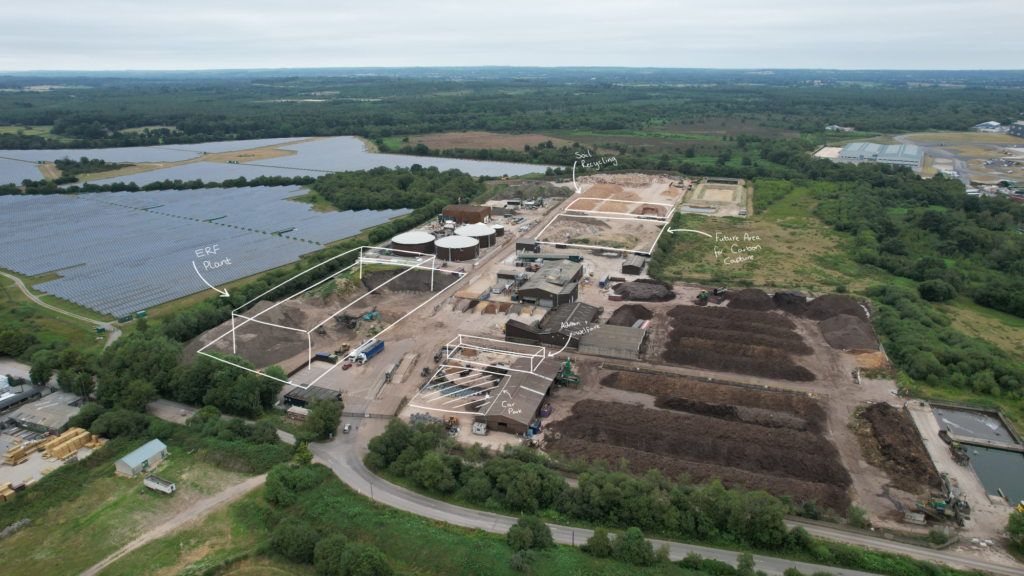
This proposal builds on an established, well-performing facility to create a more efficient Eco Park, ready to meet future local waste needs and operated by a local family business.
Benefits for the Local Community & Environment
Environmental Gains
Treatment of an additional 130,000 tonnes of local waste preventing unnecessary waste miles
Prevents approx. 19,545 tonnes of CO2e emissions annually
Generates low-carbon energy to power ~36,000 homes and heat ~6,000 homes
Supports production of sustainable compost and soil products
Enhanced management of biodiversity across 12 hectares of emerging heathland adjacent to the site
Community Benefits
Creates 30 permanent jobs, plus opportunities in construction and logistics
Fund available for Hurn & Parley Parish Councils to use for sustainability projects
Support for council recycling goals
Site designed with low odour, noise, and visual impact
What About Site Traffic & Air Quality?
Site Traffic
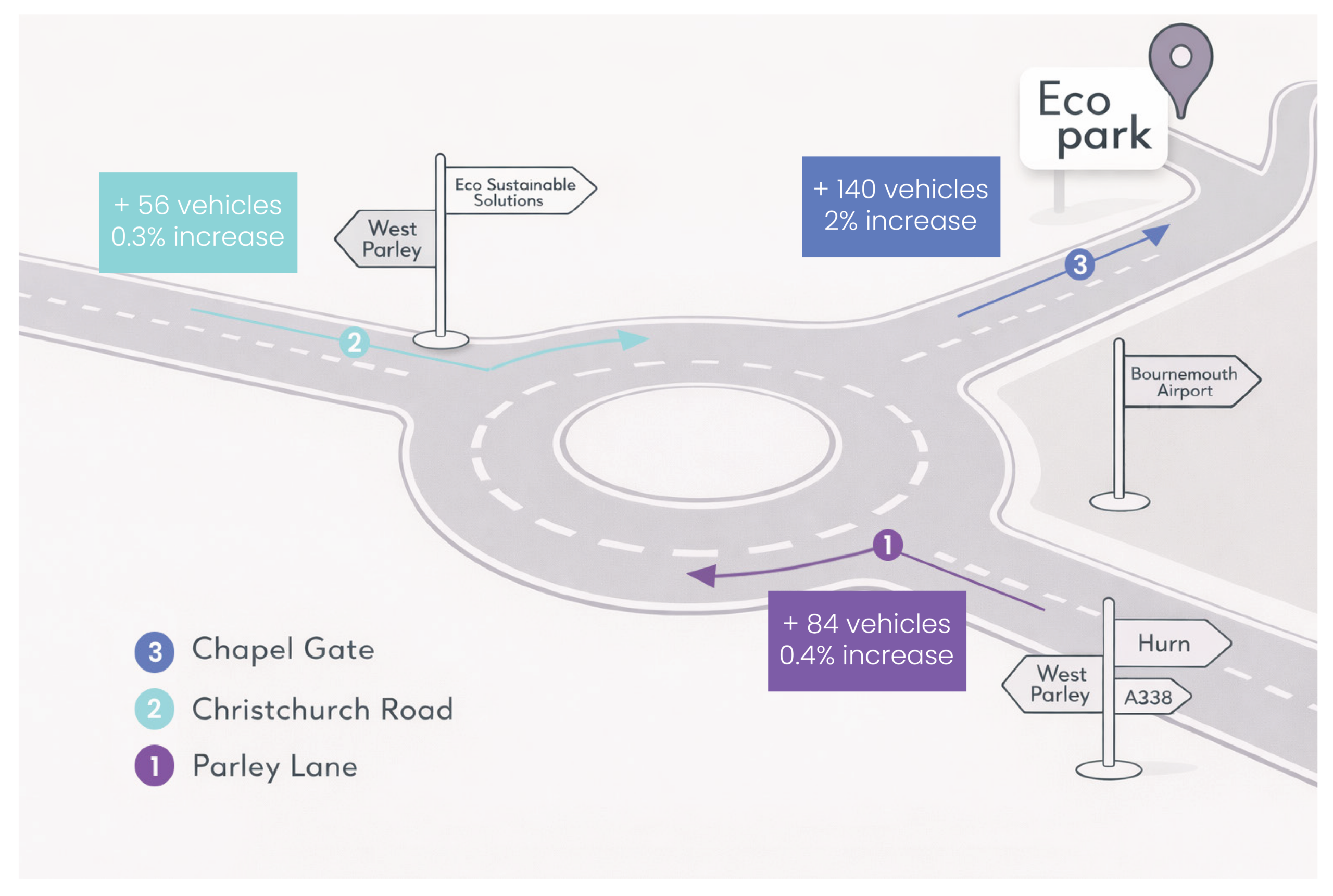
The proposals have been designed so that no significant increase in HGV movements is expected above the levels already permitted at the Eco Park.
This is because increases in some waste inputs would be balanced by reductions in others, helping to keep overall traffic movements broadly in line with existing approved levels.
We have also carefully assessed the effect of site traffic on the local road network. In addition, most deliveries take place outside peak traffic periods, helping to reduce pressure on local roads at the busiest times.
The proposed facility will reduce HGV ‘waste miles’ by more than 36,800 miles every month by treating local waste, locally.
Air Quality
Air quality is carefully monitored across the Eco Park, with assessments carried out at six strategic locations around the site.
The proposed Energy Recovery Facility will use advanced emissions control technology to minimise emissions and protect both local air quality and nearby sensitive habitats. This technology is designed to reduce emissions such as oxides of nitrogen, sulphur dioxide, hydrogen chloride and ammonia.
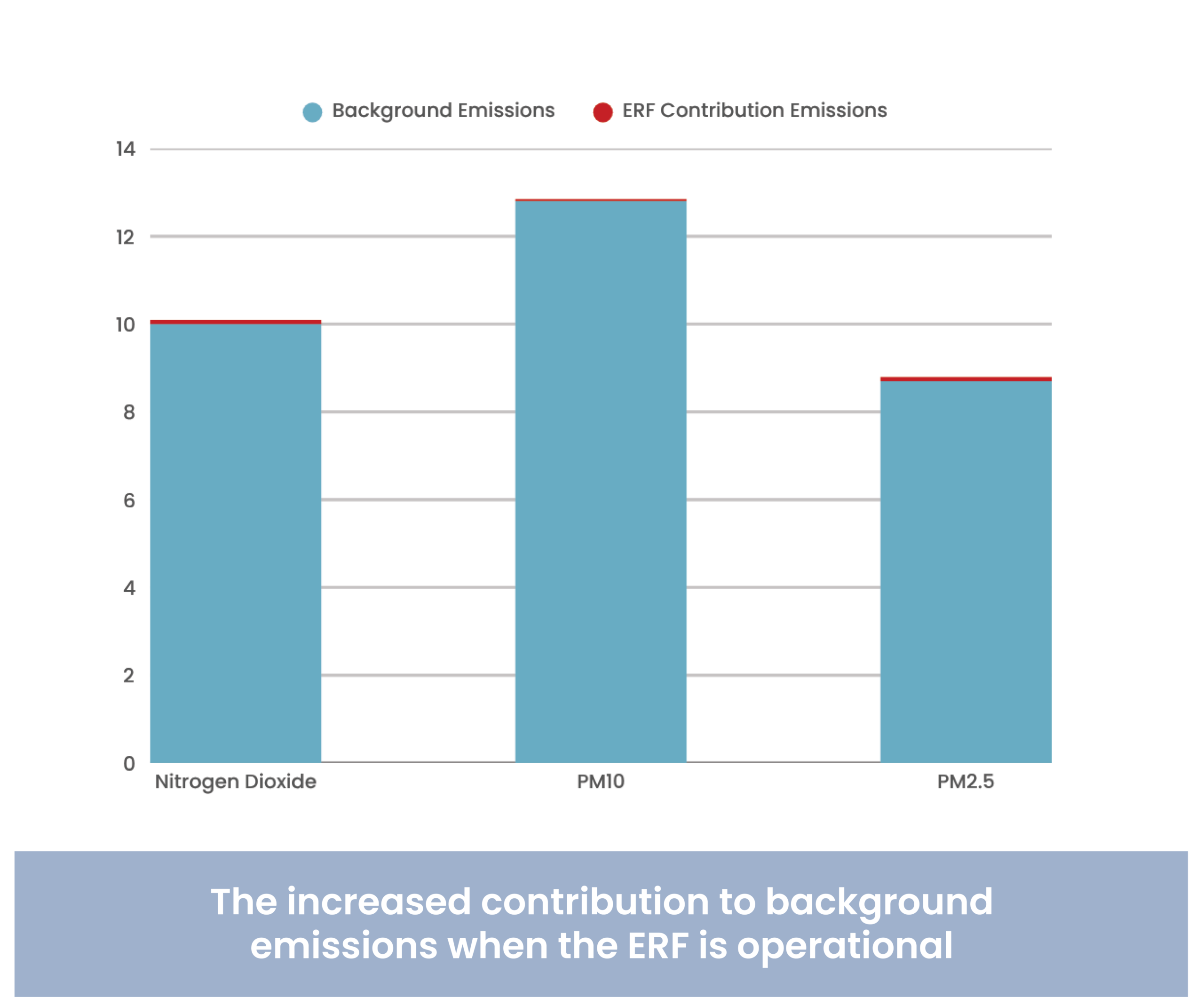
Detailed assessments show that the effect on local air quality at ground level would be very small. For example, nitrogen oxides close to the plant would be less than 1% above existing background levels.
The proposal remains well below the strict assessment thresholds used to protect human health and the environment. The facility, including emissions from the stack, would be regulated by the Environment Agency and overseen by the local Environmental Health Authority.
Modern emissions control and strict regulation mean the facility is designed to operate with no significant adverse effect on local air quality.
FAQs
Why do we need a facility like this now?
We’ve actually been recycling waste, on the Chapel Gate Eco Park site, since 1995! This is just an evolution.
What is the difference between an ERF & EfW?
In short, nothing. They’re just two different acronyms for the same type of facility. The waste industry is full of acronyms! An ERF is short for Energy Recovery Facility and an EfW is short for Energy from Waste.
What is RDF?
RDF stands for Refuse Derived Fuel. So, its fuel that has been specially manufactured from residual waste, i.e. the waste that is left over and can’t be recycled. It is typically much smaller in particle size than straight black-bag waste and can be controlled through the combustion process much more effectively.
Why have you decided to increase the size of the proposed ERF?
The site is actually allocated for a larger ERF (160,000t), within the Waste Local Plan. However, we believe, with some front-end sorting, designing the site to accept 130,000t of waste adequately meets the need of BCP & Dorset. This will prevent the need to truck waste elsewhere to other facilities or landfill. Also, crucially, it will not require waste to be trucked from outside of our local area.
What will happen to the waste if this scheme isn’t approved?
Most of the residual waste generated locally, is exported, out of the area, to landfill or other similar Energy Recovery Facilities. By intervening the 130,000 tonnes of residual waste, the facility will save ~71,351 tonnes of CO2e every year!
Alternatively, other facilities could be built, which may not be as appropriately sized, so waste could be imported from elsewhere.
What types of waste will be treated?
Chapel Gate Eco Park will increase green and wood waste recycling, use AI to sort waste more efficiently, and turn only non-recyclable waste into energy as a last step.
How will this impact local traffic?
We have undertaken extensive traffic modelling with third party expects. The results of which show a less than 1% impact on local traffic, which will typically occur outside of rush-hour, given the nature of waste collections and deliveries.
Will there be visual impact?
Whilst there will be additional buildings on site, these have been carefully sized and clad to ensure that they blend-in with the local environment as much as possible. We modelled over 10 different cladding configurations to see which was the most sympathetic to its surroundings, before deciding on the one displayed.
What about air quality?
As part of its current recycling and recovery activities, the site currently has 4 existing emission points. These are all approved and regulated by the Environment Agency and Environmental Health. We also, undertake rigorous air quality monitoring, at various points surrounding the site, which is above and beyond our statutory requirements, and have done for the past 10 years.
Despite the local activities, the air quality around the site is actually very good! With the introduction of an additional emission point on site, having very limited impacts, as you see from the graph.
When would these changes be implemented?
Subject to planning approval, construction would begin in 2027 and is expected to take 3 years.
We want to hear from you